Vulnerability management
Why Patch Management Needs a Rethink in Today’s Cybersecurity Landscape
In the ever-evolving world of cybersecurity, one truth remains constant: vulnerabilities are inevitable. Every software application, operating system, and device is a potential entry point for attackers if not properly maintained. This is where patch management comes in—a critical process that ensures systems stay secure by applying updates and fixes promptly.
The Need for Patch Management
Cybercriminals thrive on exploiting known vulnerabilities. According to industry reports, the majority of successful breaches leverage flaws that have already been disclosed and patched by vendors. Yet, organizations often struggle to keep pace with the sheer volume of updates across diverse environments. Effective patch management is no longer just an IT hygiene task—it’s a frontline defense against ransomware, data breaches, and compliance failures.
Why Traditional Patch Management Falls Short
Legacy patch management solutions were designed for simpler times—when IT environments were largely on-premises, homogeneous, and predictable. Today’s reality is starkly different:
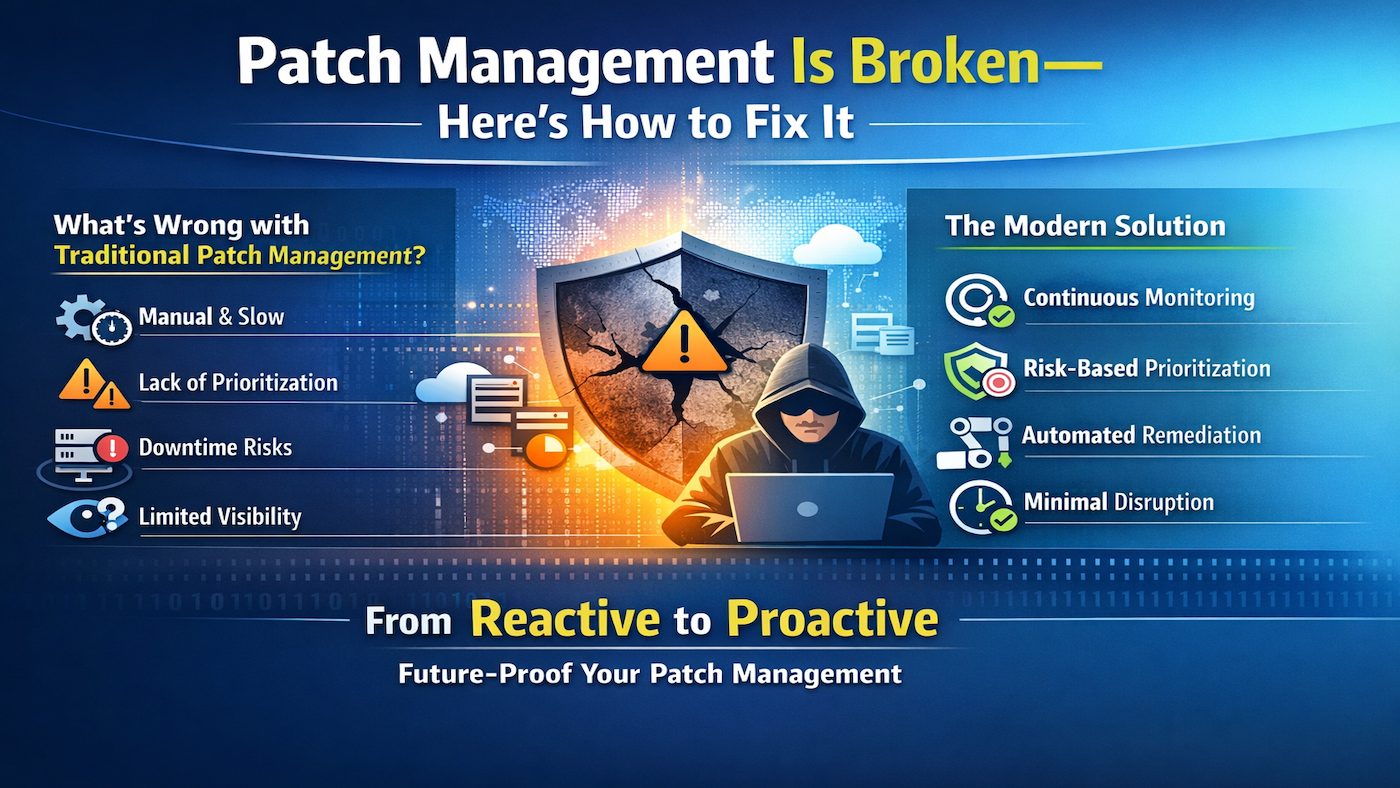
- Hybrid and Multi-Cloud Complexity: Organizations operate across on-prem, cloud, and containerized environments, making patching a logistical nightmare.
- Manual Processes and Delays: Traditional tools rely heavily on manual scheduling and approvals, leading to dangerous delays.
- Limited Visibility and Prioritization: Most solutions treat all patches equally, failing to prioritize based on risk exposure or business impact.
- Downtime Concerns: Applying patches often disrupts operations, causing teams to postpone critical updates.
The result? A widening gap between vulnerability disclosure and remediation—one that attackers are quick to exploit.
A Fresh Approach to Patch Management
Modern challenges demand modern solutions. Instead of clinging to outdated models, organizations need a risk-driven, automated, and intelligent approach:
- Continuous Assessment: Real-time visibility into vulnerabilities across all assets, not just endpoints.
- Risk-Based Prioritization: Focus on patches that address the most exploitable and high-impact vulnerabilities.
- Automation at Scale: Reduce human intervention and accelerate patch deployment without compromising compliance.
- Minimal Disruption: Smart scheduling and rollback capabilities to ensure business continuity.
Patch management should no longer be reactive—it must be proactive, integrated, and adaptive to the dynamic threat landscape. By embracing innovation, organizations can transform patching from a painful chore into a strategic advantage.
Article in collaboration with Microsoft Copilot