AI adoption
How AI Is Influencing the Software Development Lifecycle (SDLC)
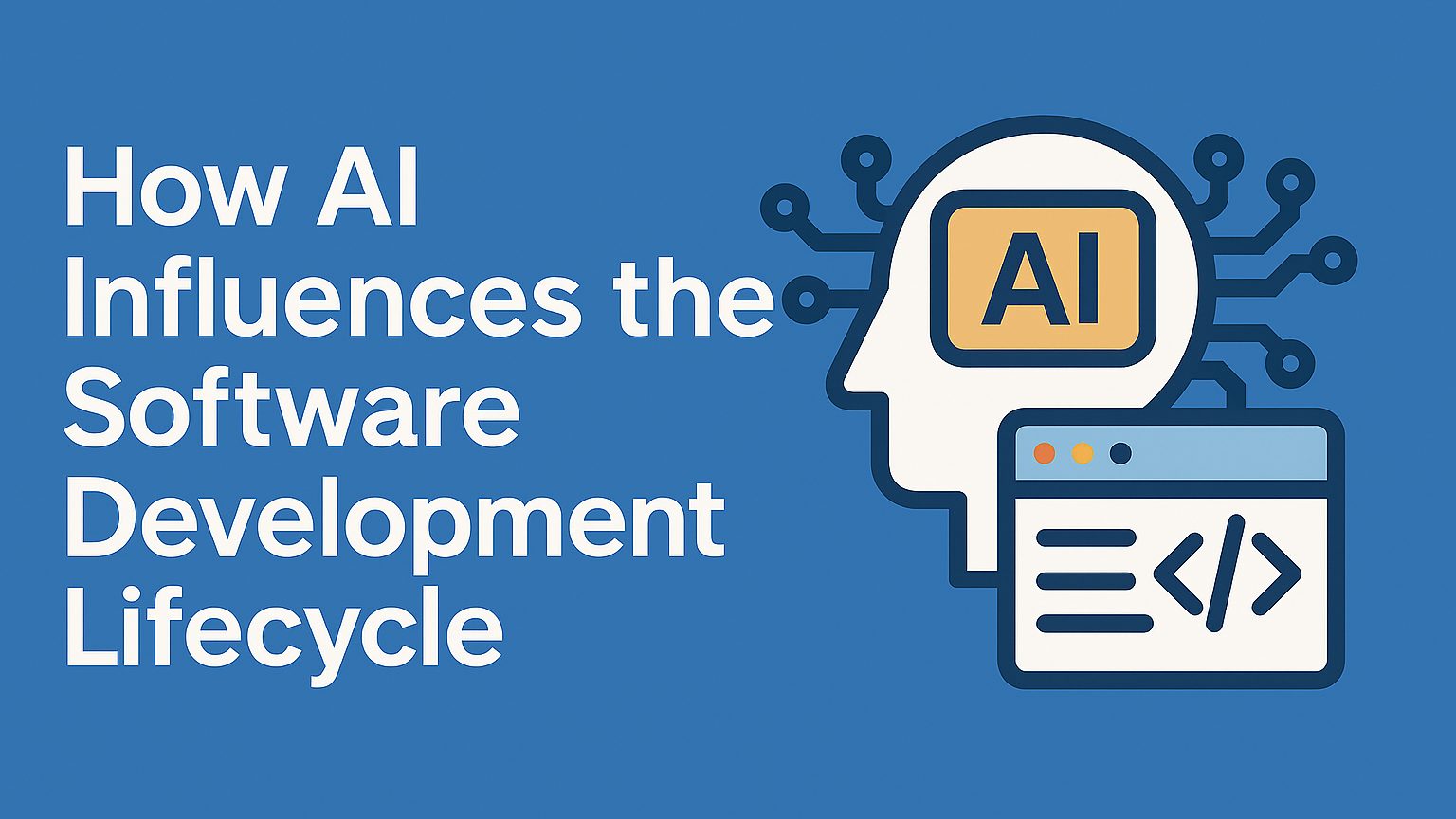
For decades, we’ve treated the Software Development Lifecycle as a well-understood, almost linear discipline: Requirements → Design → Build → Test → Deploy → Maintain
AI hasn’t replaced this lifecycle—but it has quietly started influencing every stage of it. Not by rewriting the rules, but by reshaping how decisions are made, how fast feedback loops close, and how humans interact with software creation.
Let’s look at how AI is subtly (and sometimes significantly) changing each phase of the SDLC.
1. Requirements: From Static Documents to Living Context
Traditionally, requirements were captured in documents—dense, detailed, and frozen in time the moment they were approved.
AI changes this by helping teams:
- Analyze historical requirements and user behavior
- Identify ambiguities, duplicates, or conflicting expectations
- Translate natural language into structured artifacts
More importantly, AI encourages teams to think of requirements as evolving context, not just approved checklists. The result? Fewer surprises later and earlier alignment between business intent and technical feasibility.
2. Design: Accelerated Exploration, Not Replaced Creativity
Architecture and design remain deeply human disciplines. What AI brings is speed and optionality.
AI-assisted design tools can:
- Suggest architectural patterns based on use cases
- Highlight known anti-patterns or scalability risks
- Compare design options against performance or cost benchmarks
This doesn’t remove the architect from the equation—it gives them more time to focus on why a design is chosen, not just how fast it can be drawn.
3. Development: From Writing Code to Reviewing Intent
Perhaps the most visible impact of AI is in coding.
AI now assists developers by:
- Generating boilerplate code
- Suggesting functions, tests, and refactoring options
- Helping onboard new developers faster
Interestingly, the developer’s role is shifting slightly—from pure code author to code reviewer, curator, and decision-maker. AI writes fast. Humans decide what should exist.
The quality bar hasn’t disappeared; it has simply moved upstream.
4. Testing: Predictive Confidence Instead of Reactive Discovery
Testing has always been critical—and often time-consuming.
AI enhances testing by:
- Generating test cases based on application behavior
- Identifying high-risk areas using defect history
- Predicting failure patterns before production
Instead of only finding bugs, teams now focus on reducing the probability of failure. Testing becomes more about confidence than coverage.
5. Deployment & Operations: Learning Systems in Production
Post-deployment, AI shines quietly but powerfully.
In operations, AI helps:
- Detect anomalies before users notice
- Correlate logs, metrics, and events faster than humans can
- Recommend remediation steps based on past incidents
This moves teams from firefighting to observability-driven engineering, where systems learn over time—and teams respond with insight rather than urgency.
6. Maintenance: From Cost Center to Intelligence Loop
Maintenance is no longer just “keeping the lights on.”
AI enables:
- Predictive maintenance
- Smarter patch prioritization
- Insight into feature usage and technical debt accumulation
The SDLC doesn’t really “end” anymore. It loops—fed continuously by data, usage patterns, and AI-generated insight.
Closing Thought
AI is not compressing the SDLC into fewer steps. It’s reducing friction between them.
The biggest change isn’t speed—it’s feedback. Faster learning. Earlier detection. Better decisions.
And as AI handles more of the repetitive effort, human teams are freed to focus on what still matters most: intent, responsibility, and trust in the systems we build.
The lifecycle remains. The maturity of how we execute it is what’s evolving.
Article in collaboration with Microsoft Copilot