AI security
From Web Security to AI Security: Same Principles, New Frontier
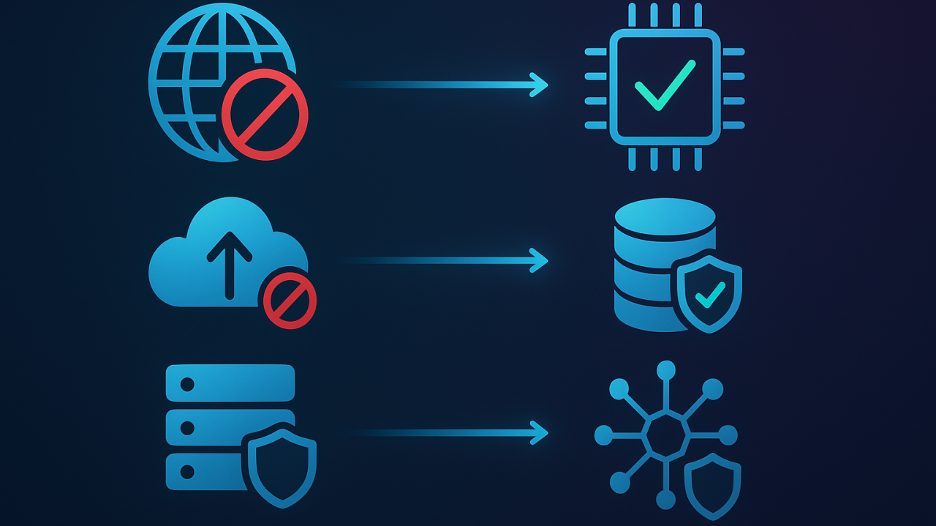
When the web became the backbone of business, we built layers of security: URL filtering, CASB, and WAF to protect users, data, and applications.
Now, as AI becomes the next big platform, the same principles apply. The attack surface has changed, but the fundamentals remain.
1. URL Filtering → AI Model Access Control
- Web Era: Controlled which websites users could access—approved vs. blocked.
- AI Era: Control which AI models users can access—only enterprise-approved, secure LLMs.
- Focus: Inside-out (user → AI platform).
2. CASB → AI Data Governance
- Web Era: Prevented sensitive data from being uploaded to cloud apps like Dropbox.
- AI Era: Ensure users don’t feed PII, confidential IP, or regulated data into AI prompts.
- Focus: Inside-out (user → AI platform).
3. WAF → AI Supply Chain & API Security
- Web Era: Protected corporate web servers from malicious external requests.
- AI Era: Secure external tools, SaaS apps, and APIs that use AI in the background to process corporate data.
- Focus: Outside-in (external AI → corporate data).
Summary
Every control we built for web security has an equivalent in AI security. The names and technologies change, but the principles—access control, data protection, and application security—remain the same.
If you had a web security strategy, you need an AI security strategy now.
How is your organization approaching AI security? Are you mapping your existing web security principles to this new frontier?
Article enhanced by Microsoft Copilot