AI adoption
The Five Reasons Organizations Keep Delaying AI Adoption — And What To Do About Them
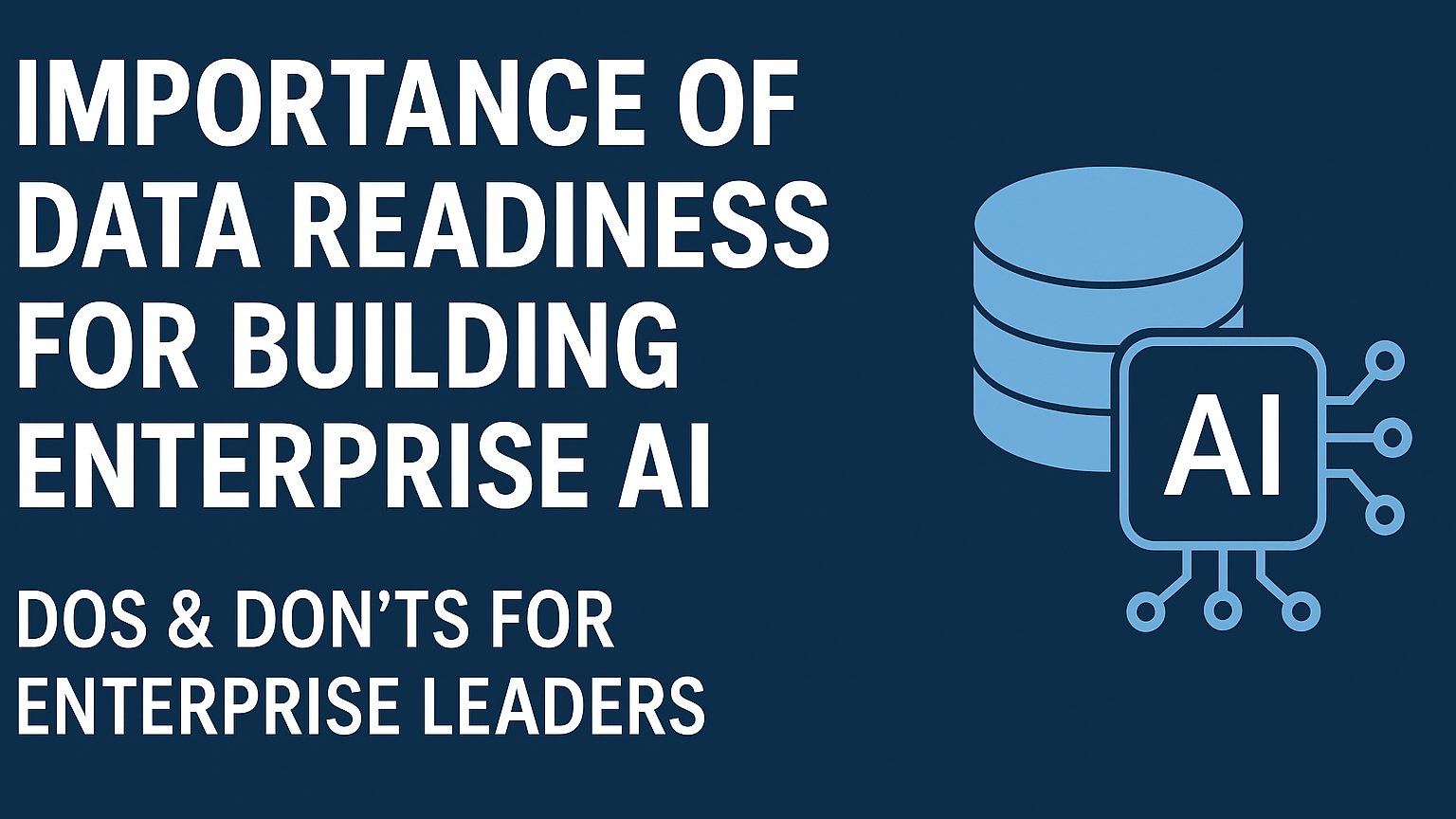
Artificial Intelligence is no longer an experimental technology reserved for digital natives and technology giants. The conversation has shifted from "Should we adopt AI?" to "How quickly can we realize business value from AI?"
Yet many organizations remain stuck in the planning phase.
Interestingly, the reasons are rarely technological. Most organizations understand the potential of AI. They see competitors launching AI-powered services, employees experimenting with generative AI, and software vendors embedding AI into every product category.
The real challenge lies in overcoming practical barriers.
After speaking with business leaders across industries, we keep hearing the same concerns. They are valid concerns. In fact, they may be the very reasons organizations have not progressed beyond proofs of concept.
Let's examine five common reasons organizations delay AI adoption—and how they can move forward.
1. "We Don't Have a Chief AI Officer"
Many organizations believe AI requires a dedicated executive leader before any meaningful initiative can begin.
While the role of a Chief AI Officer (CAIO) is becoming increasingly important, not every organization is ready to hire one immediately. For mid-sized enterprises, the challenge is often knowing where to start, how to prioritize investments, and how to align AI initiatives with business objectives.
The result is decision paralysis.
Without strategic guidance, AI discussions remain scattered across departments, with no clear roadmap or ownership.
A practical approach
Organizations don't necessarily need a full-time CAIO on day one. What they need is access to experienced AI leadership.
Novaala's AI Advisory Services provide strategic guidance that helps organizations establish governance, prioritize initiatives, assess readiness, and create an actionable roadmap. In many cases, Novaala effectively serves as a Virtual CAIO, helping leadership teams navigate AI transformation without the immediate cost and commitment of a dedicated executive hire.
2. "We Haven't Identified the Right Use Cases"
This may be the most common challenge of all.
Leadership teams understand AI's potential, but struggle to answer a simple question:
"Where exactly should we start?"
Many organizations either attempt overly ambitious projects or pursue use cases that generate excitement without delivering measurable business value.
Successful AI programs begin with identifying opportunities that are both technically feasible and commercially meaningful.
A practical approach
The best AI initiatives are closely aligned with existing business processes.
Novaala works with organizations to discover and prioritize AI use cases tailored to their industry, operational model, and strategic objectives. Rather than applying generic AI templates, the focus is on identifying areas where AI can improve productivity, automate repetitive work, accelerate decision-making, or unlock new business capabilities.
The goal is not to implement AI everywhere.
The goal is to implement AI where it matters.
3. "We Already Have People Who Can Build AI Agents"
This statement is often true.
Many organizations have talented developers, architects, and data professionals who can build AI-powered solutions.
However, building a few agents and scaling AI across an enterprise are two entirely different challenges.
Without standards, governance, reusable components, and deployment frameworks, organizations often find themselves managing isolated AI projects that become difficult to maintain and expand.
A practical approach
The question is not whether teams can build agents.
The question is whether they can build and deploy agents repeatedly, reliably, and at scale.
Novaala helps organizations establish Enterprise AI Agent Development Platforms that provide the foundation for enterprise-wide adoption. Beyond platform implementation, Novaala helps train internal teams, establish development standards, and accelerate the rollout of new agents as business requirements evolve.
This enables organizations to move from isolated experimentation to a sustainable AI operating model.
4. "Our Data Isn't Ready for AI"
This concern is completely understandable.
Most enterprises operate with decades of accumulated systems:
- Legacy databases
- Business applications
- Data warehouses
- Data lakes
- Departmental data silos
- Unstructured documents
When leaders evaluate AI readiness, they often conclude that their data landscape is too fragmented or complex.
As a result, AI initiatives get postponed until a large-scale modernization effort can be completed.
Unfortunately, that "perfect future state" rarely arrives.
A practical approach
AI readiness does not require perfect data.
It requires a practical strategy for connecting, organizing, and utilizing enterprise knowledge.
Novaala has developed Database Migration Accelerators that help organizations modernize data platforms significantly faster than traditional approaches. Beyond migration, Novaala can help establish an Enterprise Brain—a knowledge layer that brings organizational context, business knowledge, policies, and operational data into AI systems.
This enables AI solutions to generate responses and insights that are grounded in enterprise reality, rather than generic information.
5. "Data Residency and Regulations Won't Allow It"
In regulated industries, this concern is not just valid—it is essential.
Organizations operating in government, healthcare, financial services, energy, and critical infrastructure sectors must ensure strict control over where data resides and how it is processed.
For many decision makers, the assumption is that adopting AI automatically means sending sensitive data to external platforms.
That assumption often becomes a major blocker.
A practical approach
Enterprise AI does not have to be cloud-dependent.
Modern AI architectures can be implemented entirely within organizational boundaries, ensuring sensitive data remains under enterprise control.
Novaala helps organizations deploy private AI environments that operate without exposing critical information to external services. Leveraging platforms such as NVIDIA DGX Spark and localized AI infrastructure, organizations can build powerful AI capabilities while maintaining compliance, preserving data sovereignty, reducing operational risk, and controlling long-term costs.
AI adoption and regulatory compliance are not mutually exclusive.
They can coexist by design.
The Real Question
Organizations often view these challenges as reasons to delay AI adoption.
In reality, they are simply implementation challenges that require the right strategy, architecture, and expertise.
The organizations creating competitive advantage with AI today are not necessarily those with the biggest budgets or the largest teams.
They are the organizations that found a practical path forward.
The question is no longer whether AI will transform your industry.
The question is whether your organization will be leading that transformation—or explaining why it was delayed.
Novaala's role is simple: help organizations move from AI discussions to AI outcomes—securely, practically, and at enterprise scale.
Article in association with Microsoft Copilot