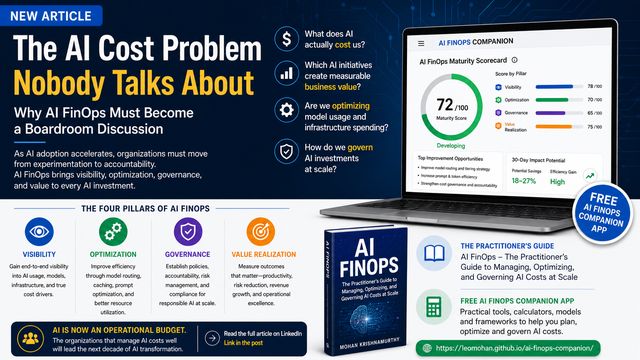
AI FinOps
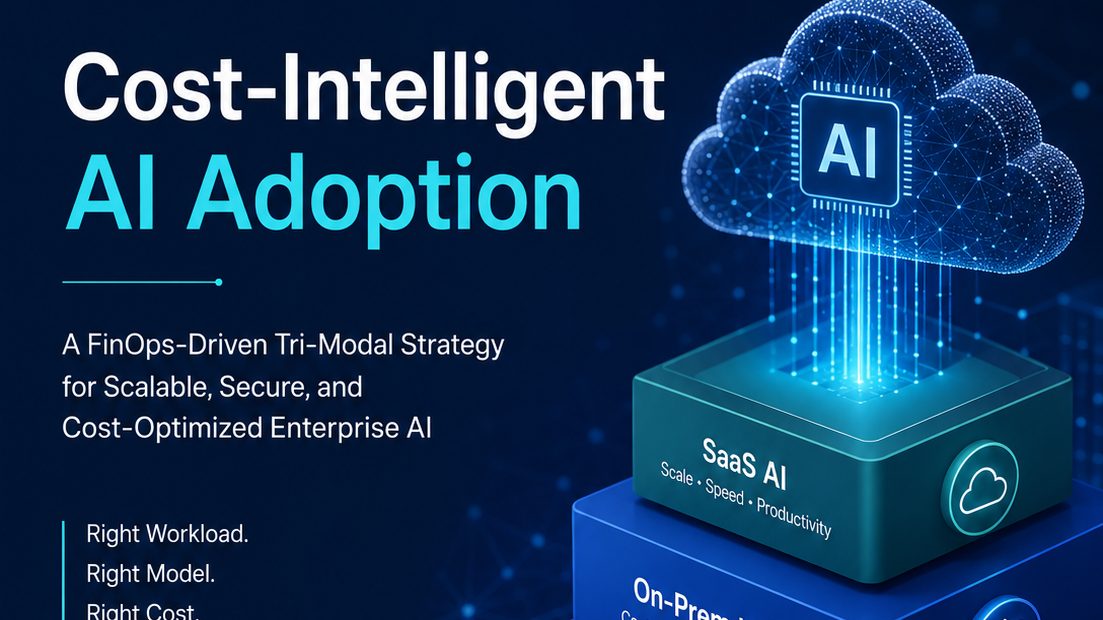
Cost-Intelligent AI Adoption: A FinOps-Driven Tri-Modal Strategy
The Core Insight
Enterprises overspend because:
- All tasks are routed to high-cost models
- No workload classification exists
- Lack of visibility into token consumption
- No governance for AI usage
The Proposed Framework: Tri-Modal AI Deployment Strategy
A structured approach to align AI workloads with cost-efficiency and business value.
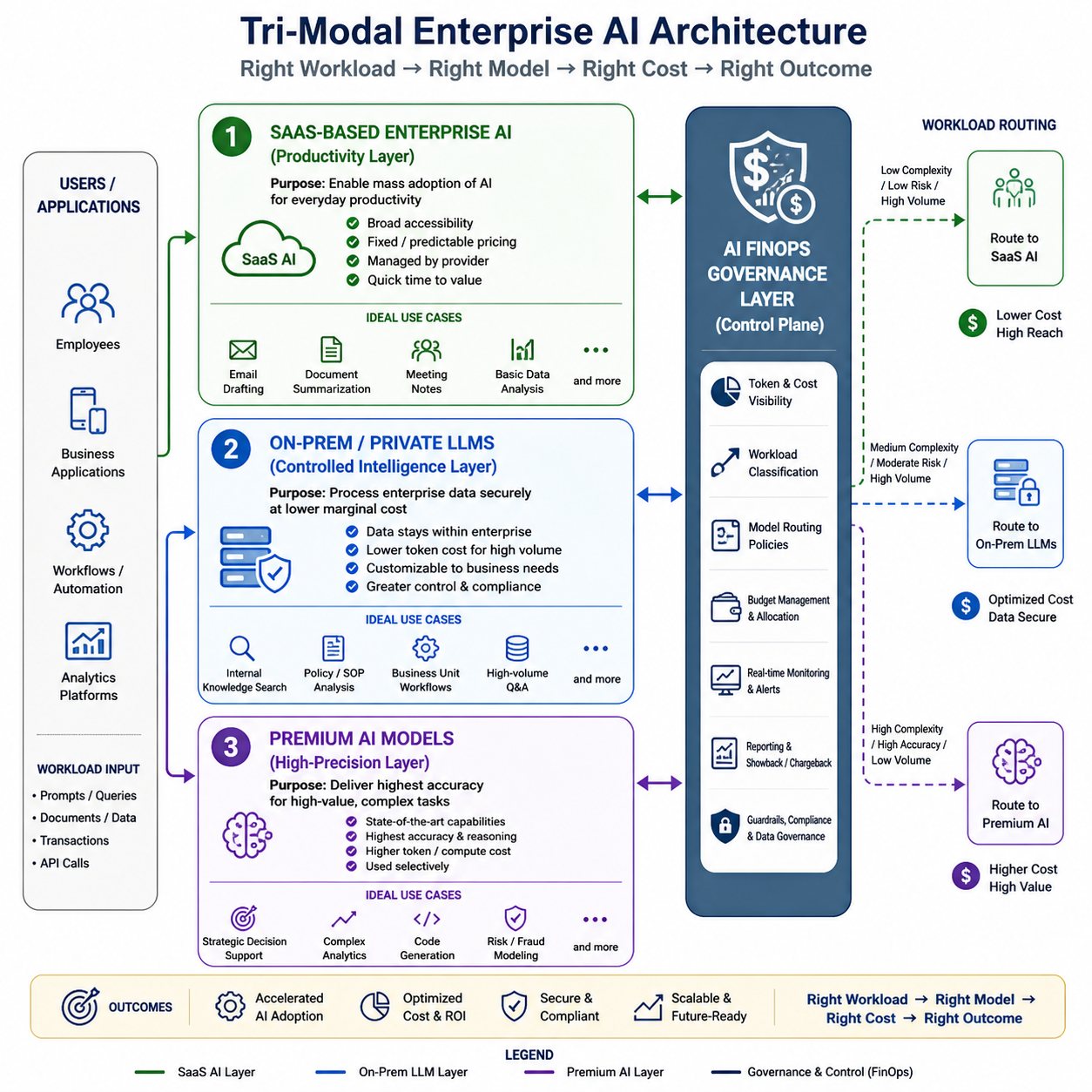
The Missing Layer: AI FinOps Governance
This is the critical differentiator of the strategy.
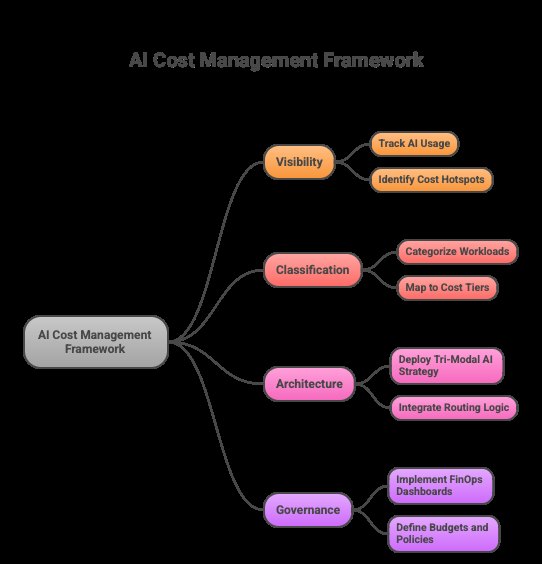
The AI FinOps Control Plane
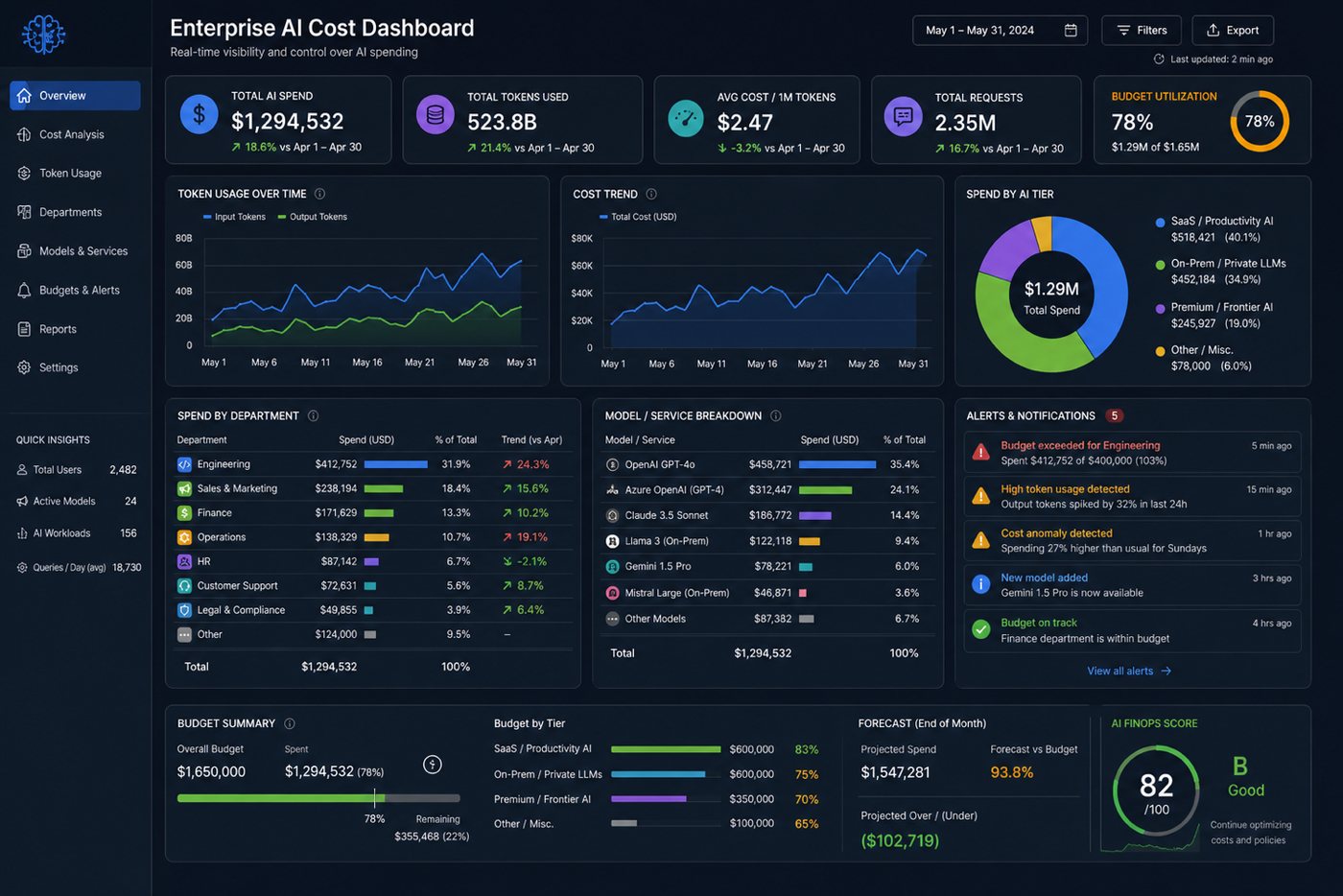
Key functions:
- Token-level cost visibility
- Workload classification
- Model routing policies
- Budget allocation per department
- Real-time cost monitoring
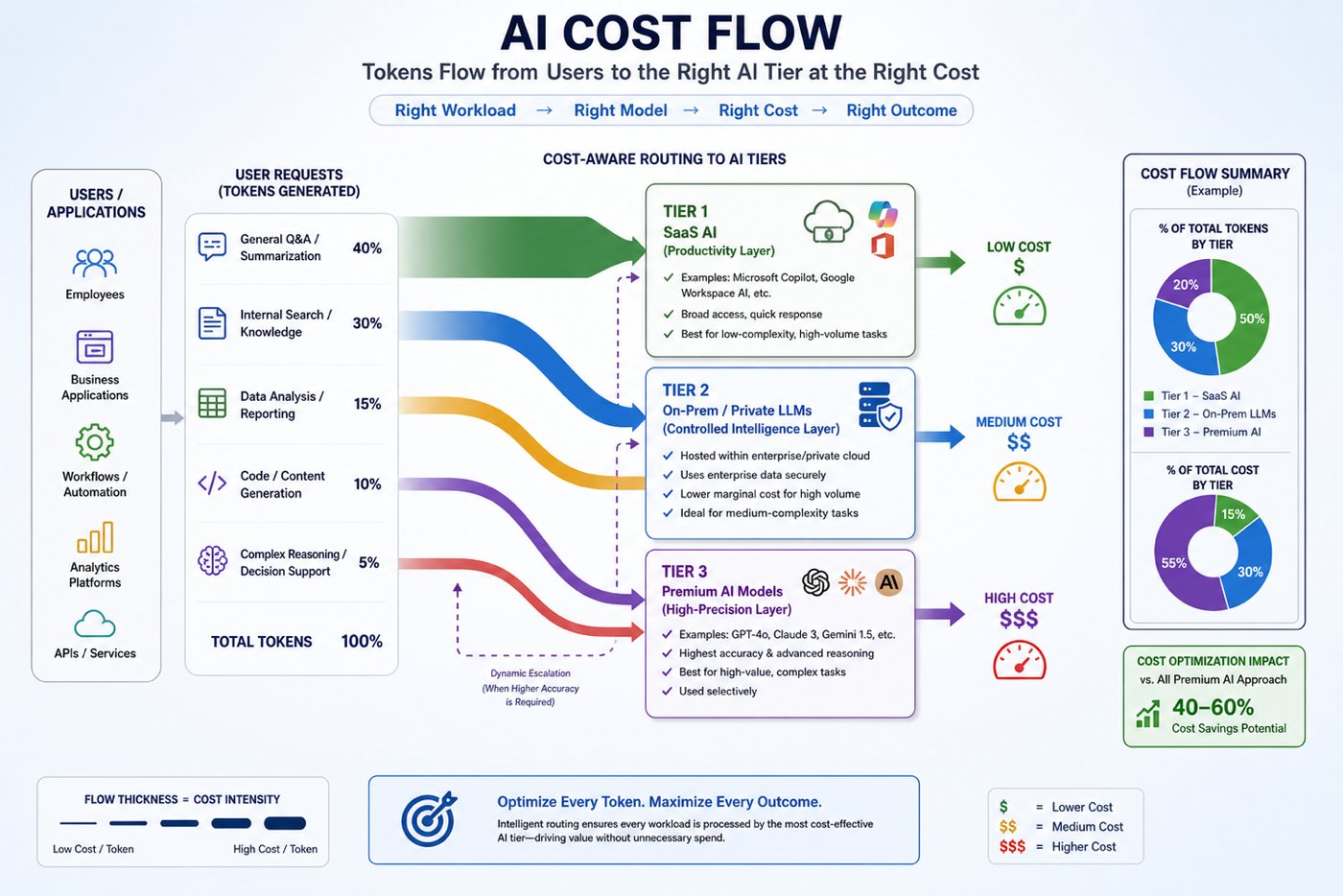
Core principle: Right Workload → Right Model → Right Cost
AI Workload Classification Model
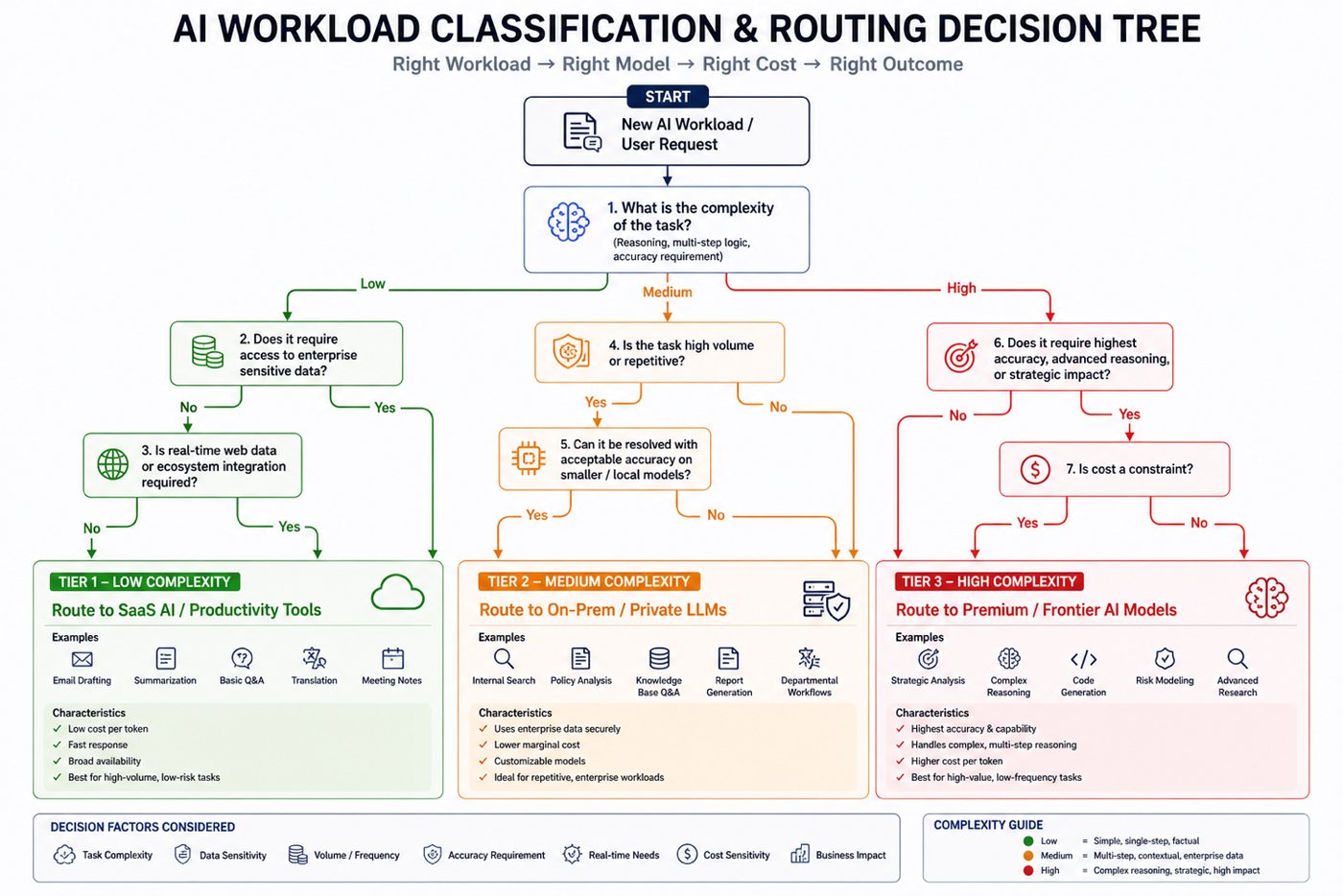
Three workload categories
| Category | Cost sensitivity | Accuracy need | Recommended tier |
|---|---|---|---|
| Routine tasks | High | Low | SaaS AI |
| Enterprise tasks | Medium | Medium | On-prem LLM |
| Strategic tasks | Low | High | Premium AI |
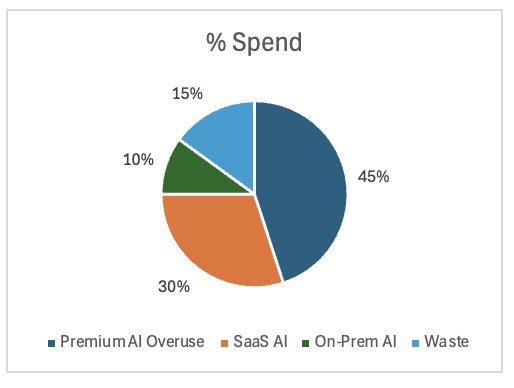
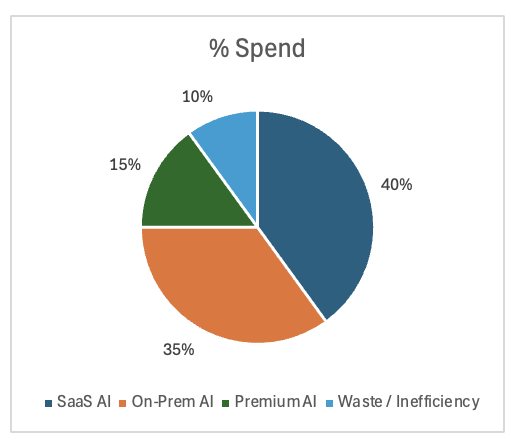
Sample Cost Allocation Model
Risks and Considerations
- Over-engineering early-stage adoption
- Lack of internal AI expertise
- Resistance from business users
- Data governance complexities
Conclusion
AI adoption should not be slowed by cost concerns, but it must be guided by cost intelligence.
Enterprises that succeed will not be those who spend the most on AI, but those who spend the smartest.
The Tri-Modal AI Strategy with FinOps Governance provides a scalable blueprint to:
- Democratize AI access
- Optimize cost-performance trade-offs
- Maintain enterprise-grade control
Organizations that establish AI FinOps governance early will gain a significant advantage in both AI scalability and financial sustainability.
References
- Gartner — Generative AI Spending Forecasts
- McKinsey & Company — The Economic Potential of Generative AI
- FinOps Foundation — FinOps for AI
- Deloitte — AI Tokens and Spend Dynamics
- Menlo Ventures — State of Generative AI in the Enterprise
- NVIDIA — Sovereign AI Architecture
- Microsoft — Enterprise AI Adoption Patterns
- IBM — Hybrid AI Strategy Reports
- AWS — AI Workload Optimization Best Practices
- IDC — Enterprise AI Infrastructure Trends